the archive as an operational strati-graph.
A conversation with Giulia Bruno and Armin Linke
publication
2025
Holotipusis an open access, peer-reviewed scientific journal devoted to Zoology, Systematics and Taxonomy. Special issues are dedicated to editorials and scientific papers focused on Art and Biology
Read the full article →
The conversation The Archive as an Operational Strati-Graph explores the archive as a living system — a dynamic and layered structure where data, images, and knowledge sediment and re-emerge through processes of observation, documentation, and translation.
Through the dialogue between Giulia Bruno and Armin Linke, the text investigates how archives operate as tools of knowledge production and as infrastructures that shape our understanding of the environment, technology, and society. The “operational strati-graph” becomes a conceptual framework to think about how visual and informational strata interact, overlap, and transform over time.
The conversation was published in Holotipus, a journal dedicated to interdisciplinary reflections on archives, documentation, and visual culture.


Holotipusis an open access, peer-reviewed scientific journal devoted to Zoology, Systematics and Taxonomy. Special issues are dedicated to editorials and scientific papers focused on Art and Biology
Interview and Concept: Giulia Rispoli in conversation ersation with  Giulia Bruno, Armin Linke

Photography: Armin Linke, Giulia Bruno
Editing: Holotipus Editorial Team
Publisher: Holotipus (Biotaxa)

Holotipusis an open access, peer-reviewed scientific journal devoted to Zoology, Systematics and Taxonomy. Special issues are dedicated to editorials and scientific papers focused on Art and Biology.Submitting papers should be addressed toPublisher, Chief Editor or Managing Editor.holotipus@holotipus.itDesigned, published and printed in Italy by Holotipus pu-blisher & ActionKlavier studio,Corso Peschiera 315/A, 10141 Torino.Holotipus rivista di zoologia sistematica e tassonomia ISSN 2704-7547PublisherMatteo GrassoNABA Department of Visual Arts and Curatorial Studies, Via C. Darwin 20, Milano (Italy), ActionKlavier studio, Corso Pe-schiera 315/A, 10141 Torino (Italy).Edited by Cristina Baldacci & Emiliano GuaraldoUniversità Ca’ Foscari Venezia, Dipartimento di Filosofia e Beni Culturali e THE NEW INSTITUTE Centre for Environ-mental Humanities (NICHE), Palazzo Malcanton Marcorà, Dorsoduro 3484/D e Ca’ Bottacin, Dorsoduro 3911, Calle Crosera, 30123 Venezia.Co-Editors-in-ChiefFrancesco VitaliMusée national d’histoire naturelle de Luxembourg (Luxem-bourg).Marco ScotiniHead of the Visual Arts and Curatorial Studies Department at NABA, Nuova Accademia di Belle Arti, Via C. Darwin 20, Milano (Italy)
Webscreen: 2025
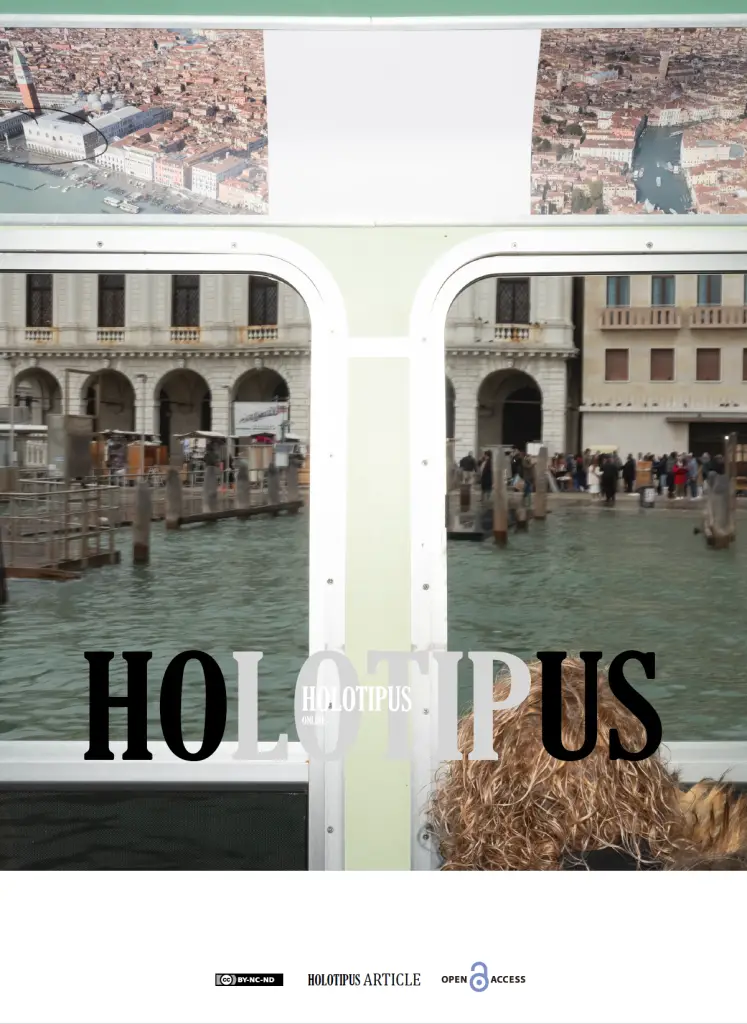
Photo cover Giulia Bruno, 2025
Accessibility
Accessibility modes
Epilepsy Safe Mode
Dampens color and removes blinks
This mode enables people with epilepsy to use the website safely by eliminating the risk of seizures that result from flashing or blinking animations and risky color combinations.
Visually Impaired Mode
Improves website's visuals
This mode adjusts the website for the convenience of users with visual impairments such as Degrading Eyesight, Tunnel Vision, Cataract, Glaucoma, and others.
Cognitive Disability Mode
Helps to focus on specific content
This mode provides different assistive options to help users with cognitive impairments such as Dyslexia, Autism, CVA, and others, to focus on the essential elements of the website more easily.
ADHD Friendly Mode
Reduces distractions and improve focus
This mode helps users with ADHD and Neurodevelopmental disorders to read, browse, and focus on the main website elements more easily while significantly reducing distractions.
Blindness Mode
Allows using the site with your screen-reader
This mode configures the website to be compatible with screen-readers such as JAWS, NVDA, VoiceOver, and TalkBack. A screen-reader is software for blind users that is installed on a computer and smartphone, and websites must be compatible with it.